
The problem this actually solves
Most nutrition advice assumes the hard part is eating less. On semaglutide that part is handled, sometimes dramatically so.
The problem shifts. With a much smaller total intake, every meal has to carry more nutritional weight, and the risk becomes deficiency and unnecessary lean mass loss rather than excess.
Protein first, and it is not close
If you change one thing about what you eat, make it protein. It is the single best-supported intervention for keeping lean mass while losing weight, and lean mass is what is most at risk here.
General guidance for adults losing weight sits somewhere around 1.2 to 1.6 grams of protein per kilogram of body weight per day, toward the higher end during active loss. That is meaningfully more than the basic RDA, which was set to prevent deficiency rather than to preserve muscle during a deficit.
Check this with a clinician before acting on it, particularly if you have kidney disease, where protein intake needs individual advice rather than a general figure.
Getting protein in when nothing appeals
The practical difficulty is not knowing you need protein. It is that a chicken breast looks like an insurmountable amount of food.
What works is density: more protein per unit of volume, so you are not asking a slow stomach to accommodate a large meal.
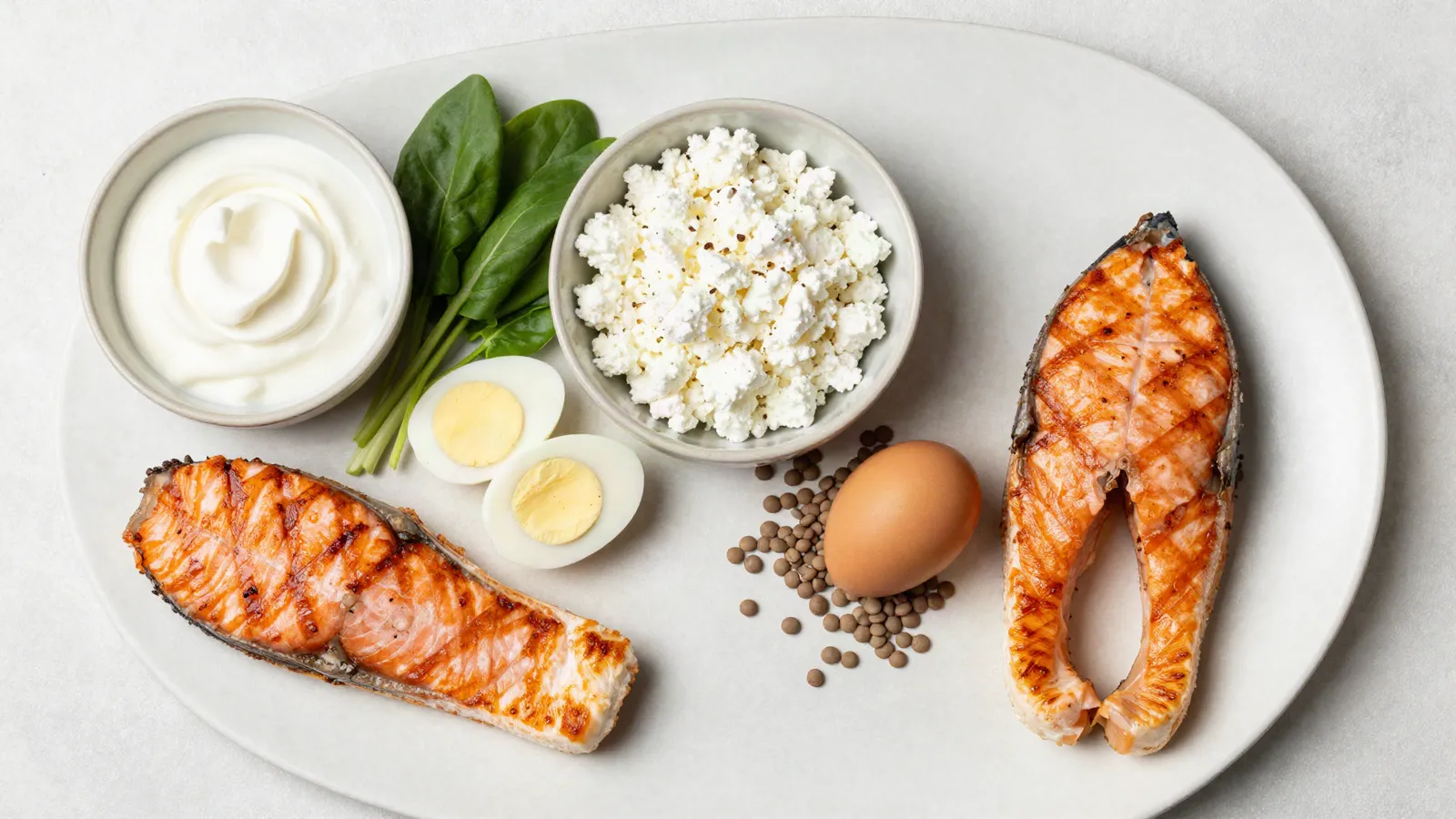
- Greek yoghurt, skyr and cottage cheese, which deliver a lot in a small volume and go down easily.
- Eggs, which are small, quick and well tolerated by most people.
- Fish, which tends to sit more easily than red meat.
- Tofu, tempeh and legumes, though legumes add fibre that some people find gassy early on.
- Protein drinks and fortified soups, which are genuinely useful on days when solid food is unappealing. This is not a supplement upsell. Liquid protein is often the difference between hitting your intake and not.
- Putting the protein portion of a meal first, before anything else on the plate, because you may well be full before you finish.
Fibre, and the constipation problem
Constipation is the effect that lasts. Fibre, fluid and movement are the first line, and most people on a much smaller total intake are getting far less fibre than they used to without noticing.
Aim for a range of sources rather than a single supplement: vegetables, fruit with skins, oats, beans, whole grains. Increase gradually, because a sudden fibre jump on a slow-emptying stomach produces bloating and gas.
Fibre without adequate fluid makes constipation worse rather than better. The two go together.
Fluids
Dehydration is the mechanism behind a meaningful share of the serious adverse events on this drug, largely through vomiting or diarrhoea leading to acute kidney injury.
Appetite suppression tends to blunt thirst cues along with hunger cues, so people drink less without registering it. Drink to a schedule rather than to thirst, and drink between meals rather than with them so you are not adding volume to a full stomach.
The micronutrients worth thinking about
When total intake falls substantially and stays there, the nutrients that tend to fall short are iron, vitamin B12, calcium and vitamin D.
The right response is not to blanket-supplement. It is to eat a reasonably varied diet and to have levels checked if you have symptoms or are eating very little. Fatigue, hair thinning and poor recovery are worth investigating rather than accepting.
Meal structure that works with the drug rather than against it
- Smaller meals, more often, rather than three conventional ones.
- Protein first on the plate.
- Moderate fat per sitting, since large fat loads slow emptying further.
- Eat slowly enough to notice fullness, which arrives earlier than you expect.
- Stop when you notice it rather than finishing the portion.
The training half of the equation
Nutrition alone does not preserve muscle. Resistance training is the other half, and the two together are far more effective than either on its own.
This does not require a gym membership or a programme. Two or three sessions a week of progressive resistance work, whatever form that takes, is the intervention. Starting at the same time as the medication is considerably easier than starting in month eight after noticing strength has gone.
Signs you are under-eating rather than succeeding
- Losing weight faster than roughly 1% of body weight per week, sustained over several weeks.
- Noticeable hair shedding a few months in.
- Persistent fatigue, feeling cold, or workouts that used to be easy becoming hard.
- Dizziness on standing.
- Losing strength rather than just weight.
- Any of these is worth raising with a prescriber, and none of them is a sign the treatment is working well.
When to get a dietitian involved
If you have diabetes, kidney disease, a history of disordered eating, or you are simply finding it hard to eat enough, a registered dietitian is the right person and this is exactly what they do. It is one of the higher-value additions to treatment and one of the least used.
Sources
- Almandoz JP, et al. Nutritional considerations with antiobesity medications. Obesity (Silver Spring). 2024;32(9):1613-1631.
- Cava E, Yeat NC, Mittendorfer B. Preserving Healthy Muscle during Weight Loss. Adv Nutr. 2017;8(3):511-519.
- Phillips SM, Chevalier S, Leidy HJ. Protein requirements beyond the RDA: implications for optimizing health. Appl Physiol Nutr Metab. 2016;41(5):565-572.
- American Diabetes Association. Standards of Care in Diabetes, Obesity and Weight Management.
- Wegovy (semaglutide) injection, prescribing information. Novo Nordisk.